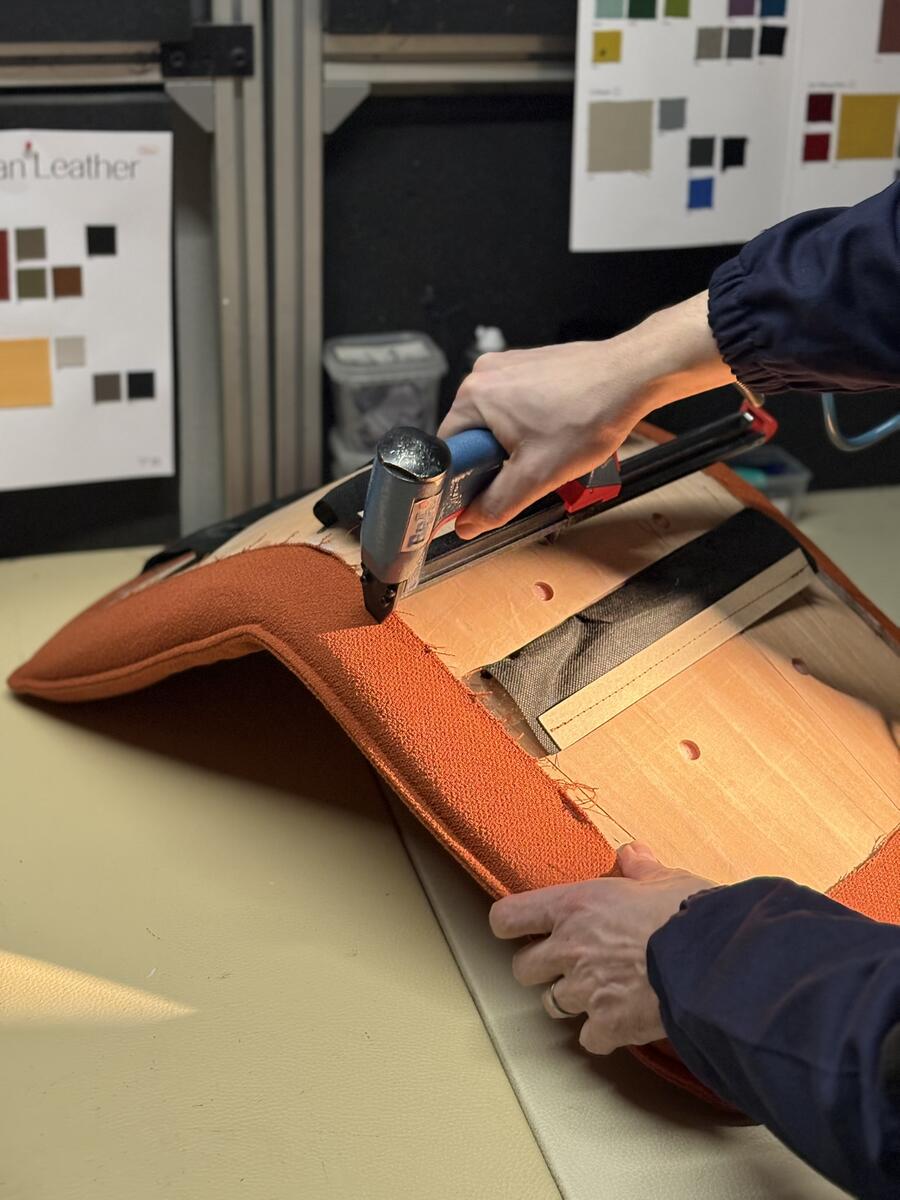
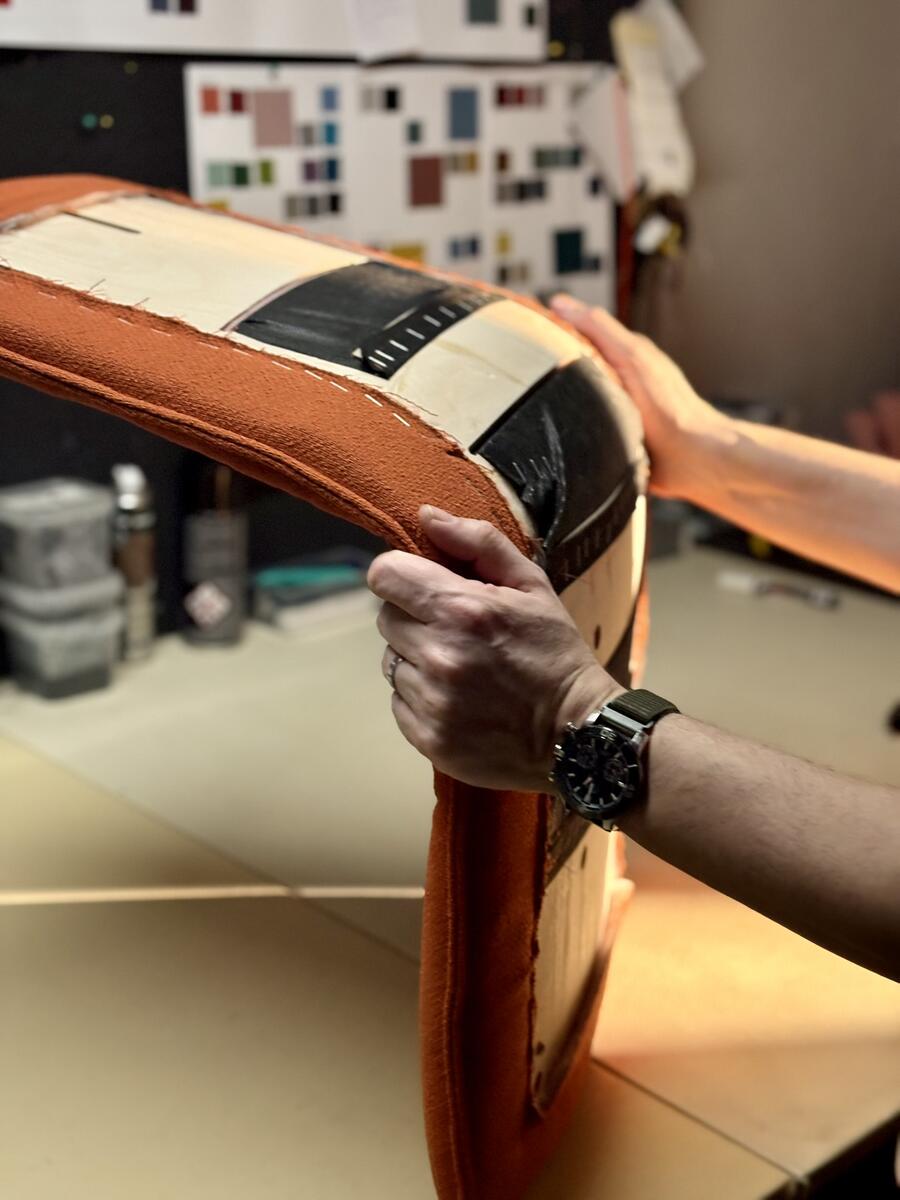
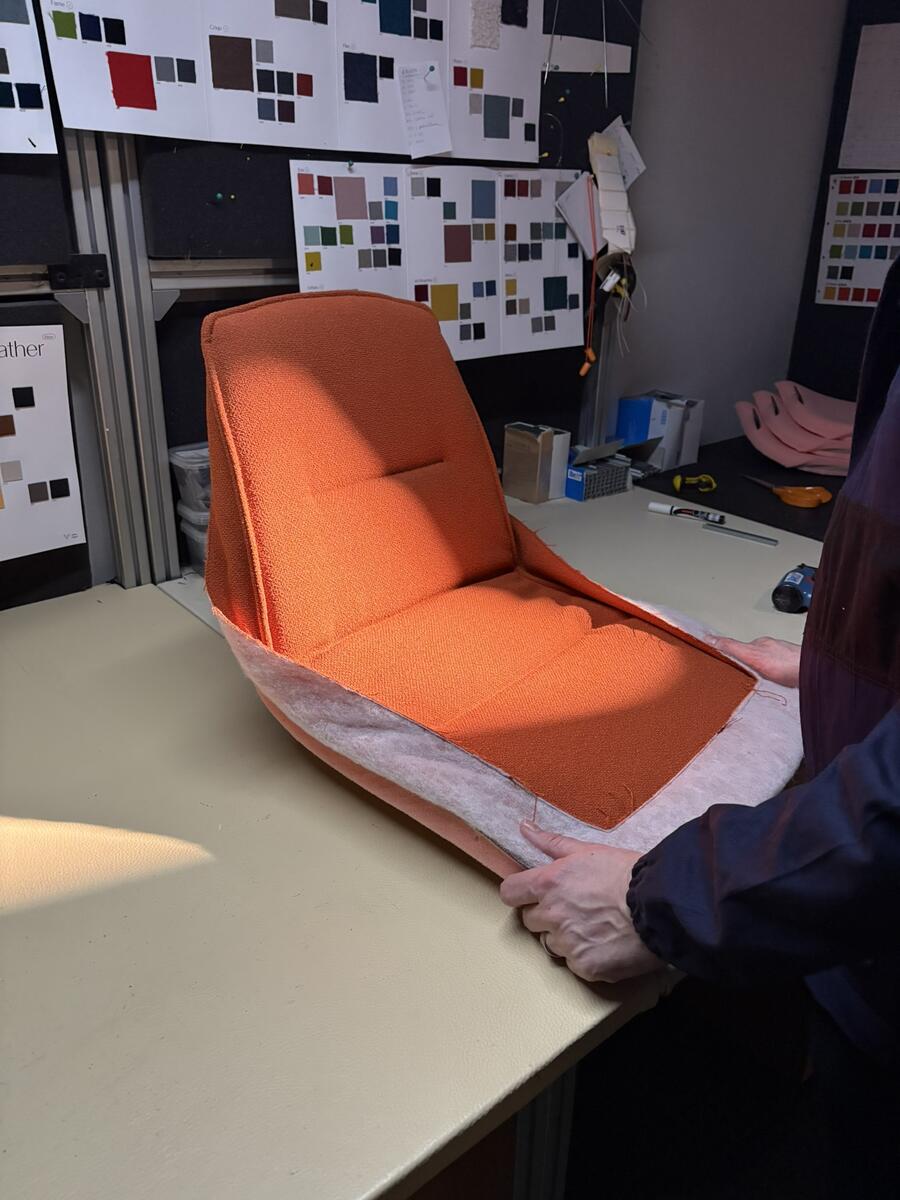
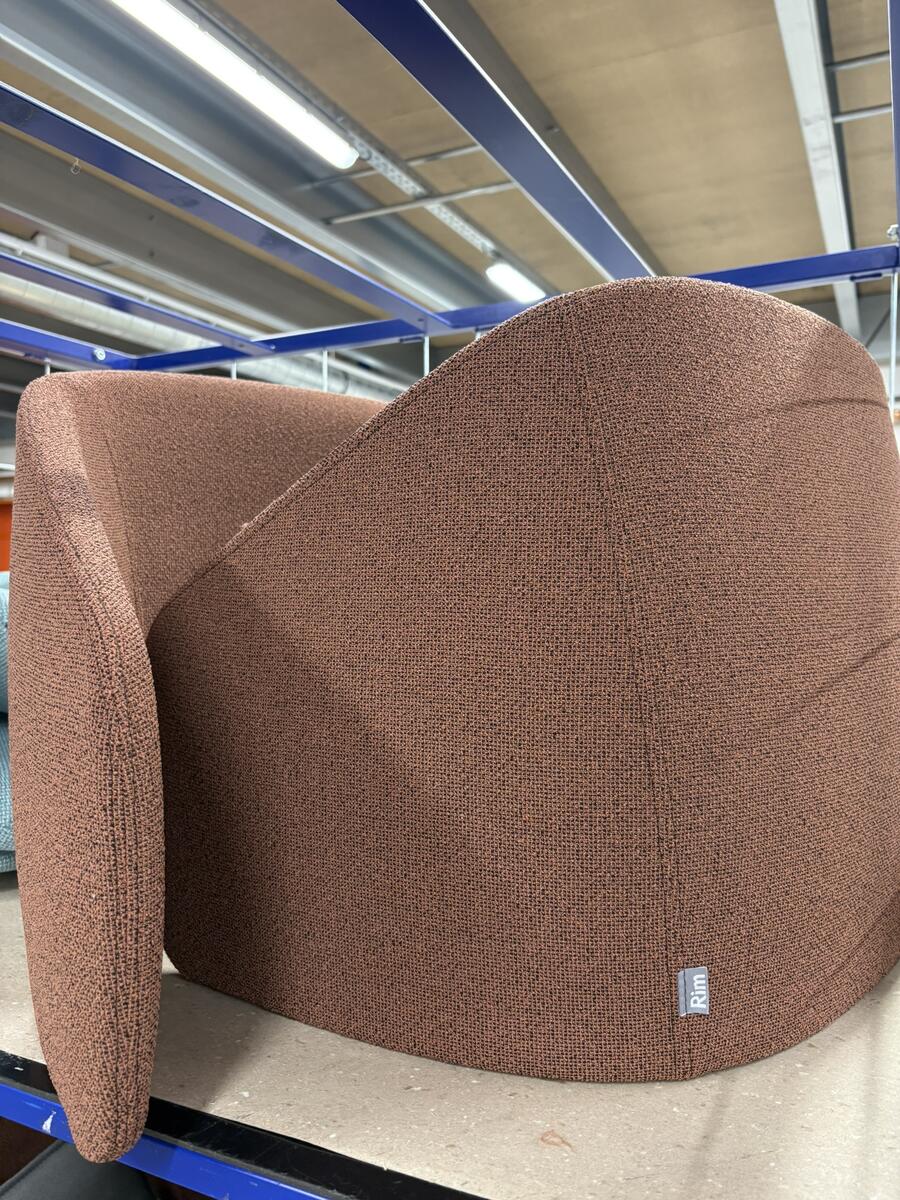
Upholstery: Precision and Quality Craftsmanship
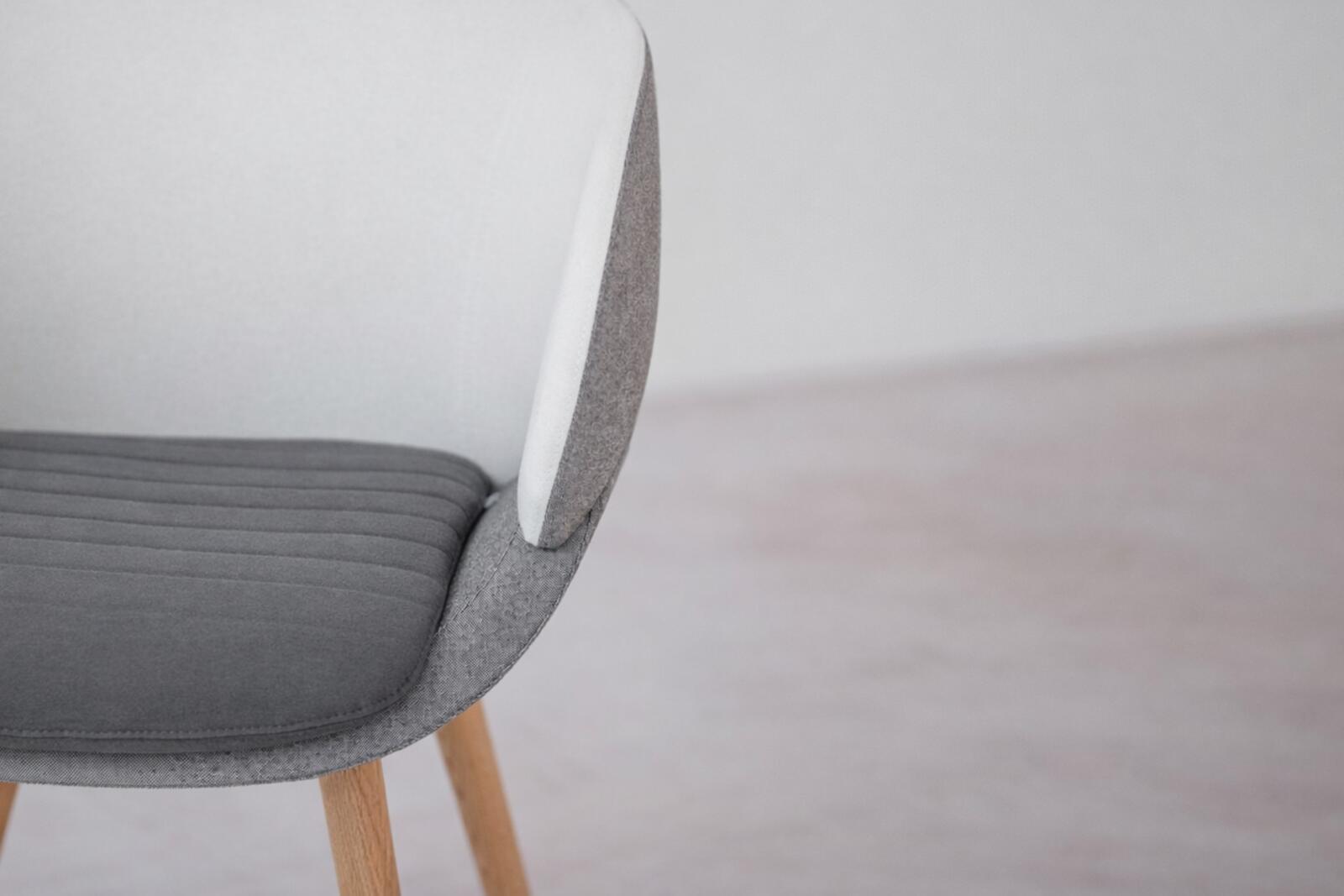
Upholstery is our domain. It’s a craft built on skill, precision, and attention to detail—from material selection to the final stitch. At RIM, it’s a cornerstone of quality: so a chair or armchair not only looks right, but stands up to everyday use over the long term.
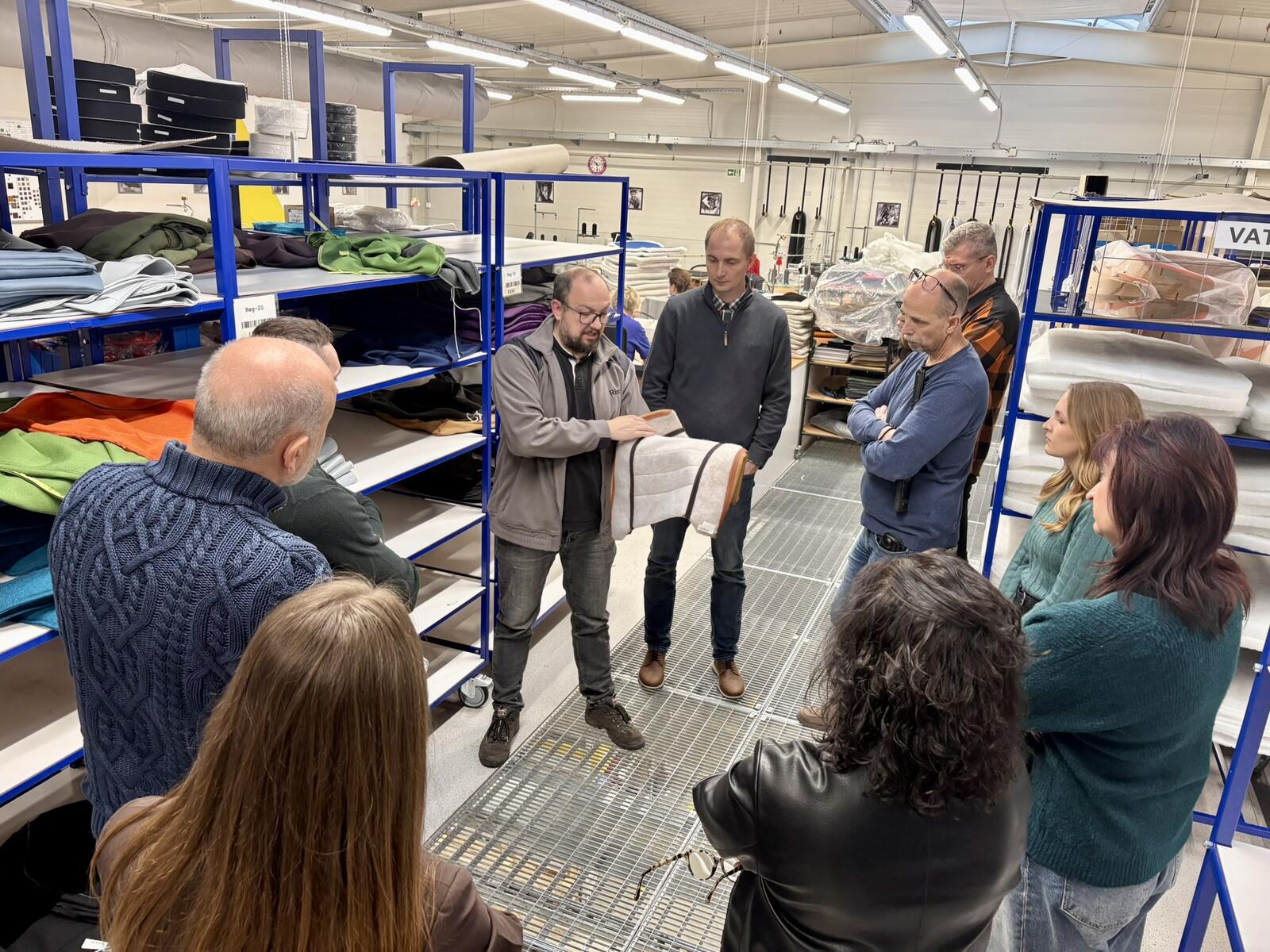
In the interview that follows, Marek Kopeček, head of our upholstery workshop, explains how comfort is built “from the inside,” which materials make sense for different types of seating, why we sometimes say “no,” and why sustainability is about more than fabrics but also about processes, product lifespan, and repairability. Meticulous process, proven methods, and a seasoned team—that’s the foundation behind every piece we make.
What are the main materials you use to upholster our products?
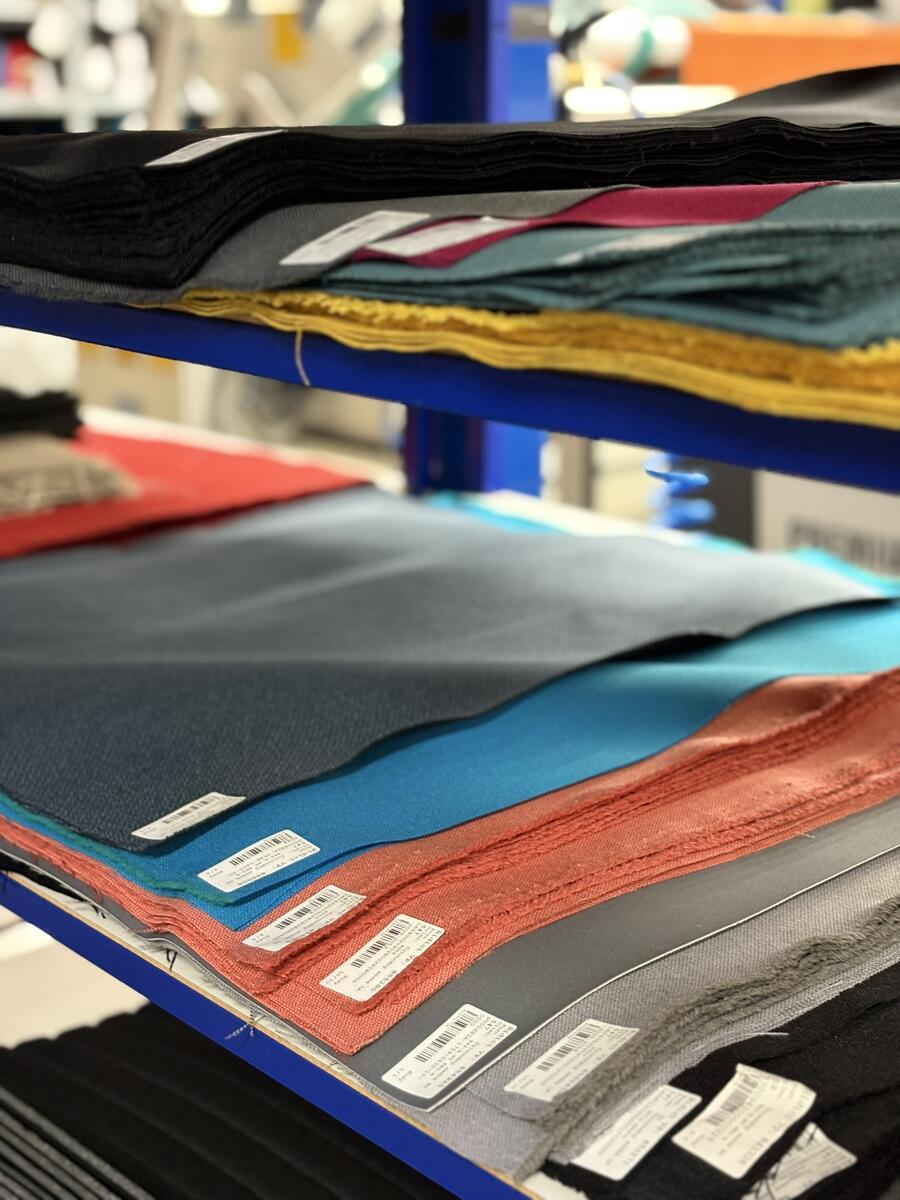
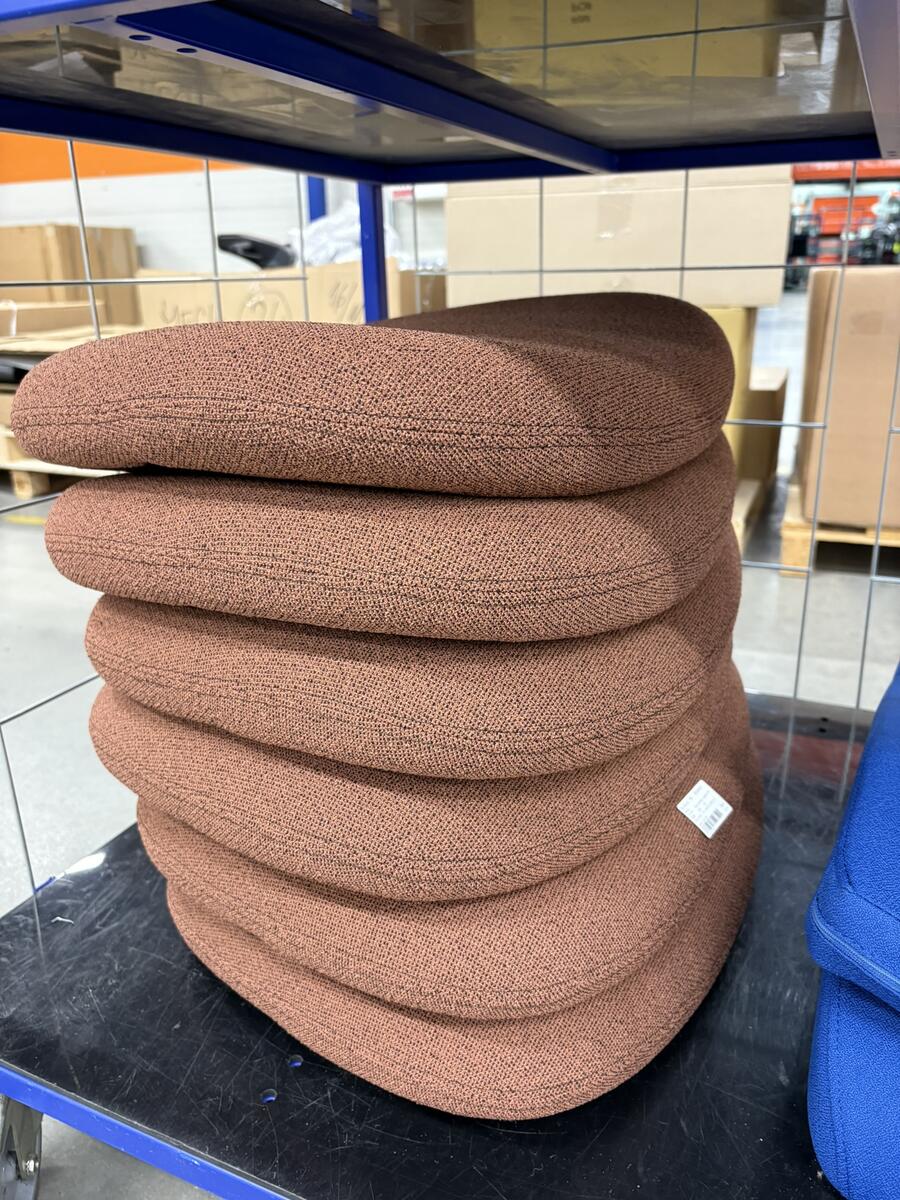
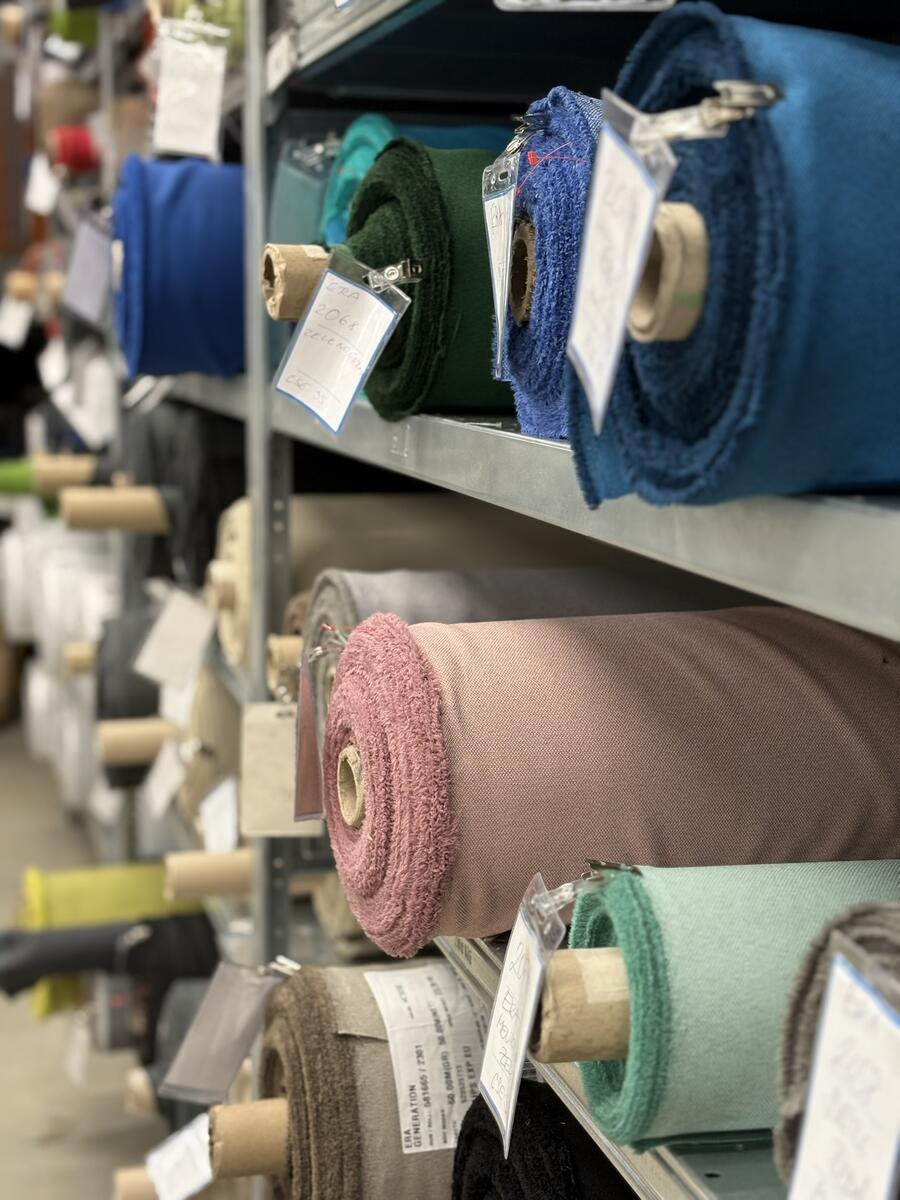
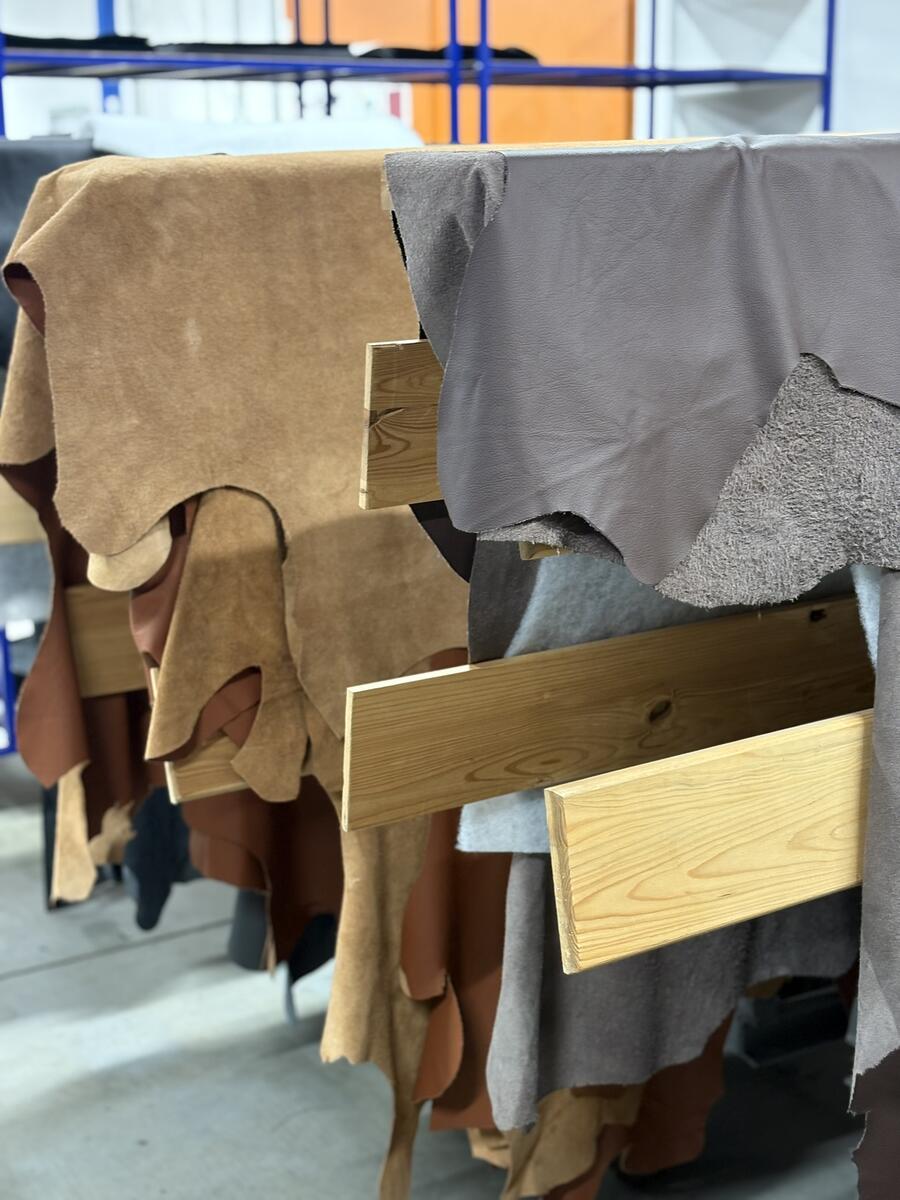
We mostly work with textile materials of various types. For swivel task chairs, the upholstery needs to be smooth, easy to maintain, and durable. For soft seating, the requirements are more about aesthetics and a comfortable feel. These materials often have lower abrasion demands, but a stronger emphasis on design. I should also mention special washable materials: covers resistant to standard cleaning agents for medical environments, fabrics with silver content for antibacterial properties, and, last but not least, vegan and natural leathers.
How do you ensure quality and precision in every piece you produce?
We have a rigorous onboarding and training process, standardized work procedures, and we invest in renewing our machinery. Together with the Development Department we have a defined process for handling nonconformities. We keep internal records to secure accurate data and to identify the root causes of any quality issues.
How do you handle customers’ requests for individual customisations?
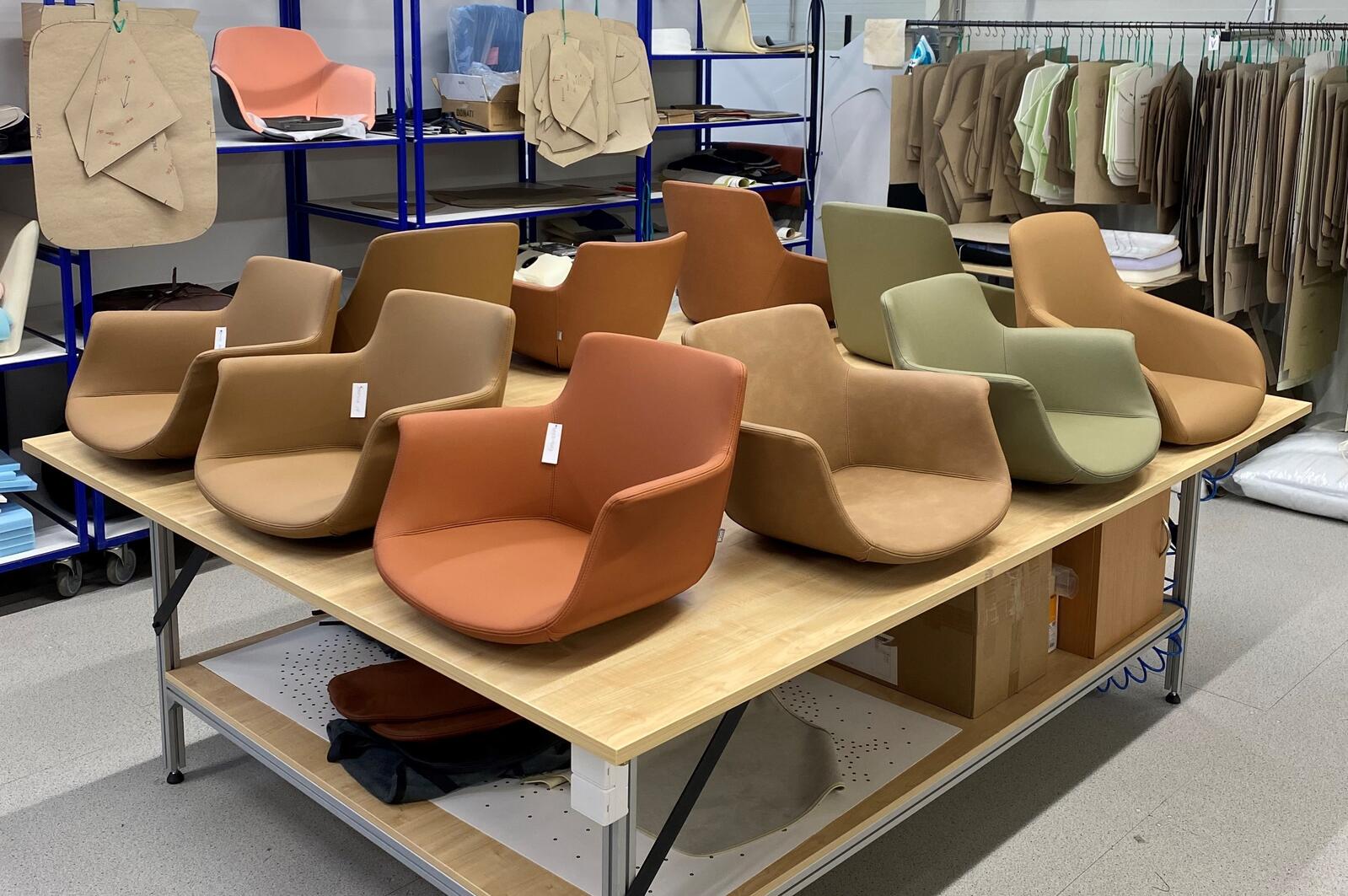
Such requests are increasingly common. Customers pay more attention to the overall impression of the interior and want to stand out. We see all kinds of requests, and if it’s within our capabilities, we try to accommodate them. Not everything is possible, though. We have to say no when a customer insists on an unsuitable upholstery material. We have quality standards in place and, if we determine the result would not be 100 %, we must inform the customer. There are challenges we’ve successfully managed, for example, the Winx chair with embroidery for a film festival; upholstering products in a customer’s own leather; working with perforated leather; or a project requiring a special high-temperature-resistant adhesive. Today the most common nonstandard request is colour combinations, which we handle practically on a daily basis.
How has your Upholstery Department evolved over the years?
The most dynamic changes happened in the last ten years. The biggest shift was purchasing a single-ply cutter. In the sewing room we completely renewed the sewing machines and added new special machines. The upholstery room itself moved into a newly built hall, including a new gluing area. During this move we also commissioned upholstery presses that had been idle for a long time. Material handling and material availability in the warehouse improved thanks to handling cages and a new storage area dedicated solely to upholsterers. We also changed how we record operations by introducing barcodes and using tablets instead of handwritten job sheets. There have been many changes and we’re continually working to create the best possible working conditions for our employees.
Which trends in design and materials are you currently seeing?
A major trend is making workplaces and public spaces pleasant and visually appealing. You get there through greater product variability, colour, and material choice. On task chairs, black and grey still dominate; on soft seating, it’s more playful, because the colour of the furnishings affects how you feel in a meeting room or how quickly time passes in a doctor’s waiting area. Materials with a story are also more common, for example those made from recycled content. More than ever, sustainability and ecology are coming to the forefront.
Sustainability and eco-friendly materials — what role do they play in your upholstery process?
It’s clear upholstery today won’t return to the era of purely natural materials like raw wood, metal springs, African grass, horsehair or, on premium pieces, kapok. It’s good that society is focused on this topic, because since the 1940s natural materials have been increasingly replaced by industrially processed plastics: first in construction, then in padding and spring layers, and finally in upholstery itself. It’s understandable and went hand in hand with broader trends: the pace of life sped up and design evolved with new materials.
In recent years, however, interest in sustainability has grown. We now have options to use recycled content in plastics and wooden components. We can choose more eco-friendly adhesives and coverings with recycled or natural content. But sustainability isn’t only about the product. It requires a systematic approach to make it truly long-term. Waste sorting is standard today. Next comes minimising waste generation: our CNC cutter typically produces less offcut than manual cutting. It’s also about investing in equipment: our modern sewing machines have energy-efficient servo motors and LED lighting. Even automatic thread trimming reduces waste over time. We’re set to about 1 cm of thread, whereas manual trimming used to be several centimetres.
In industrial upholstery, setting fully “green” processes can be challenging. Unfortunately, dispersion (water-based) adhesives or low-solvent adhesives aren’t always suitable and may not meet requirements. Dispersions have longer evaporation times (water as carrier). Low-solvent adhesives tend to be denser, making application more difficult.
Sustainability also considers the financial side and the overall viability of the process. It’s important to know how a material can be reused or disposed of at end of life. We design a chair while already thinking about whether it can be reupholstered later and how much new material that would require. In today’s consumer culture it can be hard to think “repair, not replace,” but that economic perspective is part of sustainability too. We all know nothing lasts forever, yet we can learn a lot from previous generations. It’s great that our company has been addressing this, and I believe we’ll continue to improve and educate ourselves in this field.
What does it mean to you to see a finished product that has passed through your hands?
Behind every product I see the process it went through. I see the work of the employees who contributed, their expertise and craftsmanship, the precision in the details, and the overall impression. I’m no longer directly involved in production, so the products don’t literally pass through my hands. But I feel good when customers like our products and when I hear praise for the materials used or the workmanship. A beautiful product isn’t just about upholstery. It’s also good design, the right materials, and thorough production preparation. In that sense, every finished product reflects the entire RIM team, because we all have a share in it.